
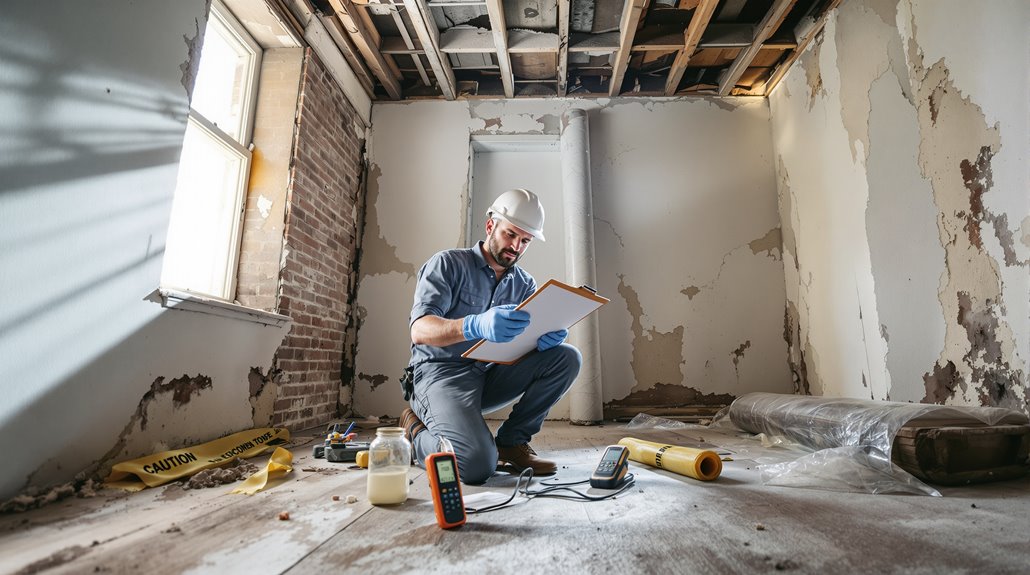
You need an asbestos survey before renovation or demolition if your building was built before asbestos was fully phased out, or if your work may cut, drill, strip, or expose concealed materials. You can’t rely on visual checks alone, as asbestos may be hidden and stable until disturbed. A qualified surveyor must inspect accessible areas and sample suspect materials. The survey reduces legal risk, delays, and remediation costs, and more detail on scope can help you plan ahead.
Key Takeaways
- An asbestos survey is required before renovating or demolishing buildings built before asbestos was fully phased out.
- It is needed whenever cutting, drilling, stripping, or removing materials that may disturb hidden asbestos.
- A refurbishment or demolition survey is required before structural changes, including wall, ceiling, flooring, or partial demolition work.
- The survey must be done by a qualified, accredited surveyor and cover accessible areas where asbestos may be present.
- Delaying the survey can cause project stoppages, higher remediation costs, legal penalties, and safety risks.
When Is an Asbestos Survey Required?
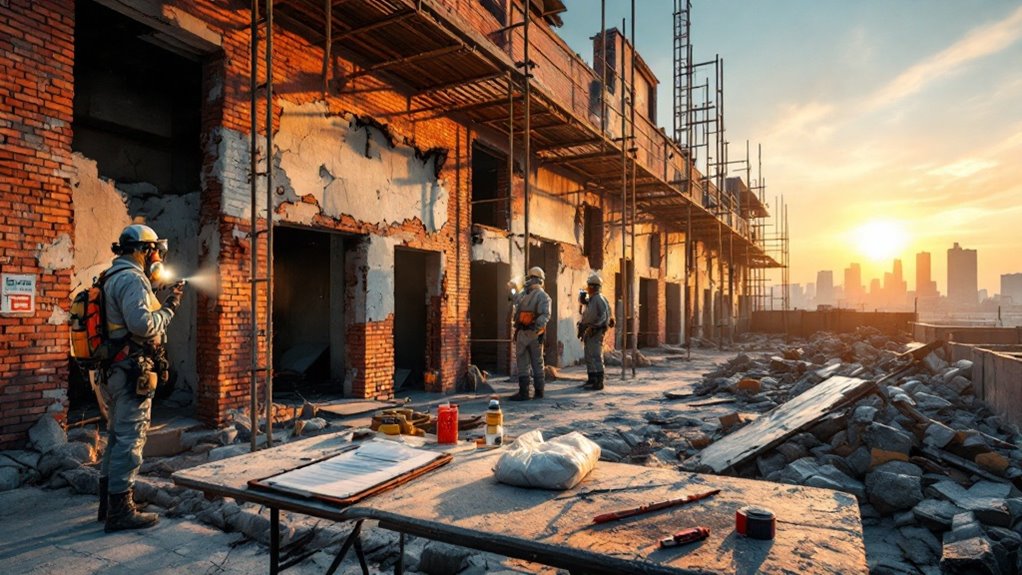
An asbestos survey is required before you begin renovation or demolition work that may disturb building materials in a structure built before asbestos was fully phased out, since you need to identify any asbestos-containing materials before work starts. You additionally need one when your project will cut, drill, strip, remove, or expose suspect materials, regardless of whether the building looks intact. Asbestos regulations usually trigger this duty before any intrusive work, and they often require a qualified surveyor to inspect accessible areas and sample materials. You should treat the survey as a compliance control, not an option. Throughout the survey process, AirPro maintains full compliance with state and federal regulations to protect both workers and building occupants from asbestos exposure risks. Survey costs vary with building size, complexity, and sampling needs, but delaying the survey can increase remediation expense, schedule risk, and legal exposure.
Why Do Older Buildings Need an Asbestos Survey?
Older buildings need an asbestos survey since materials installed before asbestos restrictions often contain it in insulation, floor tiles, pipe wrap, roofing, ceiling texture, and fireproofing, and you can’t reliably identify those materials by appearance alone. Your building age is a primary exposure indicator, as hidden asbestos can remain stable until you disturb it. A survey lets you verify locations, condition, and friability before any work begins, reducing asbestos health risks and supporting compliant planning. Professional environmental inspection and air quality support ensures comprehensive documentation and compliance verification throughout the assessment process.
| Factor | Technical implication |
|---|---|
| Older construction | Higher probability of legacy asbestos-containing materials |
| Hidden finishes | Visual inspection alone can’t confirm composition |
| Disturbance potential | Cutting, drilling, or demolition can release fibers |
| Survey data | Allows informed control measures and risk management |
You need verified material data, not assumptions, when asset integrity and worker protection both matter.
Which Renovation Projects Need a Survey?
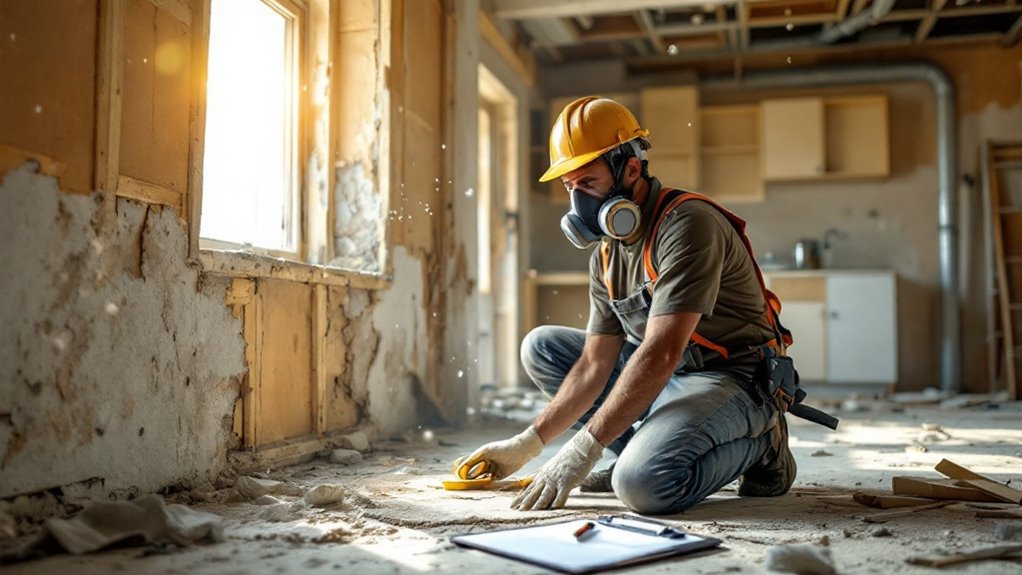
You need an asbestos survey before any renovation that disturbs structural wall removal, since hidden materials can be released when you open cavities or alter load-bearing assemblies. You likewise need one for flooring and ceiling work, as tile, mastic, joint compound, and textured finishes often contain asbestos. Utility and system upgrades can trigger the same requirement when you cut into chases, penetrations, or service spaces that may contain asbestos-containing components. Our certified professionals can conduct asbestos surveys and sampling to ensure compliance with state and federal regulations before your project begins.
Structural Wall Removal
When a renovation calls for structural wall removal, you need an asbestos survey before work begins, as disturbing concealed materials can release fibers from insulation, joint compound, pipe lagging, textured coatings, or other hidden asbestos-containing products. You must treat load-bearing or fire-rated walls as high-risk assemblies since opening them can expose concealed finishes, patched penetrations, and service chases. A competent surveyor will inspect accessible components, sample suspect materials, and map results so you can plan demolition safely and comply with asbestos regulations. If the wall supports building loads, you additionally need engineering review to confirm structural integrity before cutting, shoring, or selective removal. Never assume age or appearance proves absence; only documented survey data lets you control exposure, sequence work, and avoid regulatory violations. Following asbestos remediation, post-remediation air testing confirms that airborne fiber levels are safe for workers and future occupants.
Flooring And Ceiling Work
Flooring and ceiling work often triggers the need for an asbestos survey since these surfaces commonly conceal asbestos in vinyl tiles, mastic, linoleum backing, plaster, textured coatings, acoustic tiles, and pipe or duct insulation hidden above ceilings. You should treat any removal, disturbance, or hidden substrate exposure as presumptively suspect until sampling confirms otherwise. Floor finishes can contain asbestos in flooring materials, underlayment, or adhesive residues, while ceiling tiles and associated coatings may release fibers when cut, drilled, or pried loose. Before you start demolition or strip-out, you need a competent survey that identifies accessible and concealed ACM, documents locations, and guides safe sequencing. AirPro’s asbestos abatement services cover surveys, sampling, and safe disposal to ensure protection of personal property and establishment of clear containment boundaries during residential work. If the work will breach original layers, assume survey coverage is required and don’t rely on visual inspection alone.
Utility And System Upgrades
Utility and system upgrades often require an asbestos survey since they disturb concealed building fabric in ways that can expose ACM behind walls, above ceilings, or within plant spaces. You should treat HVAC replacements, electrical reroutes, plumbing tie-ins, fire-suppression work, and data cabling as high-risk triggers for system assessments. AirPro’s assessment process includes understanding building conditions and access points to identify hidden ACM in industrial facilities.
| Project | Survey trigger |
|---|---|
| HVAC replacement | Duct chases and insulation |
| Electrical upgrade | Wall and ceiling penetrations |
| Plumbing retrofit | Pipe lagging and boxing |
| Fire alarm install | Ceiling void access |
| Panel changeout | Plant-room ACM |
Before utility upgrades begin, verify all service routes, confirm demolition extents, and document inaccessible voids. A targeted asbestos survey reduces delays, supports compliant sequencing, and lets you control exposure before contractors cut, drill, or isolate services.
When Does Demolition Trigger a Survey?
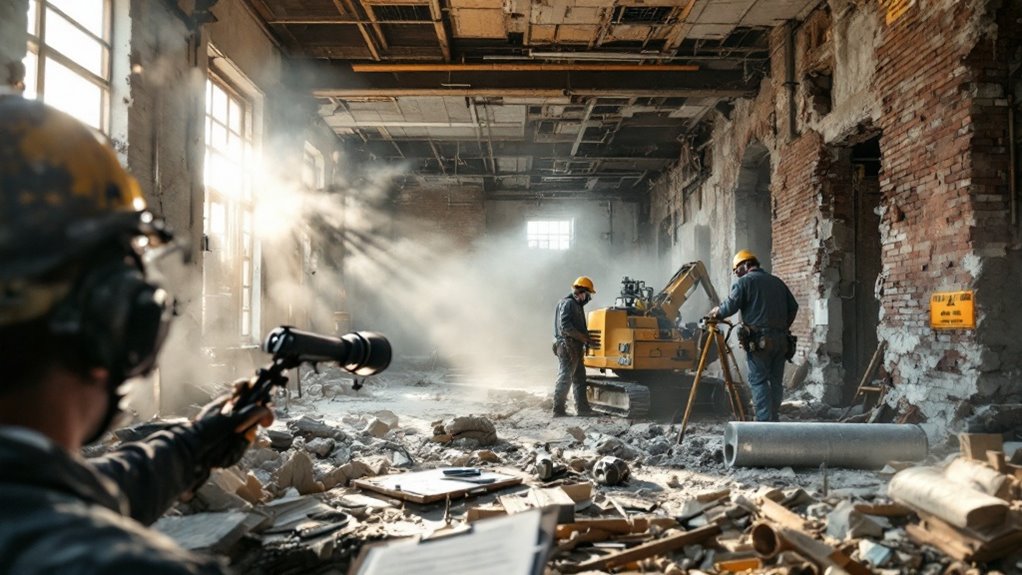
If you plan to demolish all or part of a structure, you usually trigger an asbestos survey before work begins. You should treat demolition criteria as the decisive threshold: any action that removes structural elements, finishes, or building systems can create survey implications under regulatory rules. Even partial demolition counts when you’ll disturb materials during tear-out, deconstruction, or selective removal. You can’t rely on project size alone; the trigger is the potential to affect suspect materials while the structure is being dismantled. Before you mobilize equipment, verify whether permits, owner records, or local asbestos programs require prior inspection. If the scope changes and demolition expands, your obligation may reappear immediately. In practice, you need the survey first so you can plan legally, sequence safely, and avoid stop-work enforcement. This requirement applies across diverse facility types, including commercial environments, industrial plants, residential properties, government buildings, and educational institutions, each with specific regulatory compliance obligations.
What Does an Asbestos Survey Check?
An asbestos survey checks for asbestos-containing materials that could be disturbed by the planned work, including insulation, flooring, ceiling texture, roofing, siding, pipe wrap, joint compound, and other suspect building products. You’re verifying whether those materials contain asbestos types such as chrysotile, amosite, crocidolite, tremolite, actinolite, or anthophyllite. The surveyor inspects accessible areas, documents conditions, and uses survey methods that include visual assessment, sampling, and laboratory analysis. You need this data to define what exists, where it sits, and how likely your project will contact it. You’re additionally identifying hidden or layered materials, as older renovations can conceal asbestos behind finishes. A proper survey gives you a defensible inventory that supports planning, controls exposure risk, and prevents avoidable disturbance before you start work. Early detection of asbestos through comprehensive surveys prevents costly problems that can escalate if discovered post-purchase or during construction, ensuring compliance with regulations and supporting informed property management decisions.
Management Survey vs. Refurbishment Survey
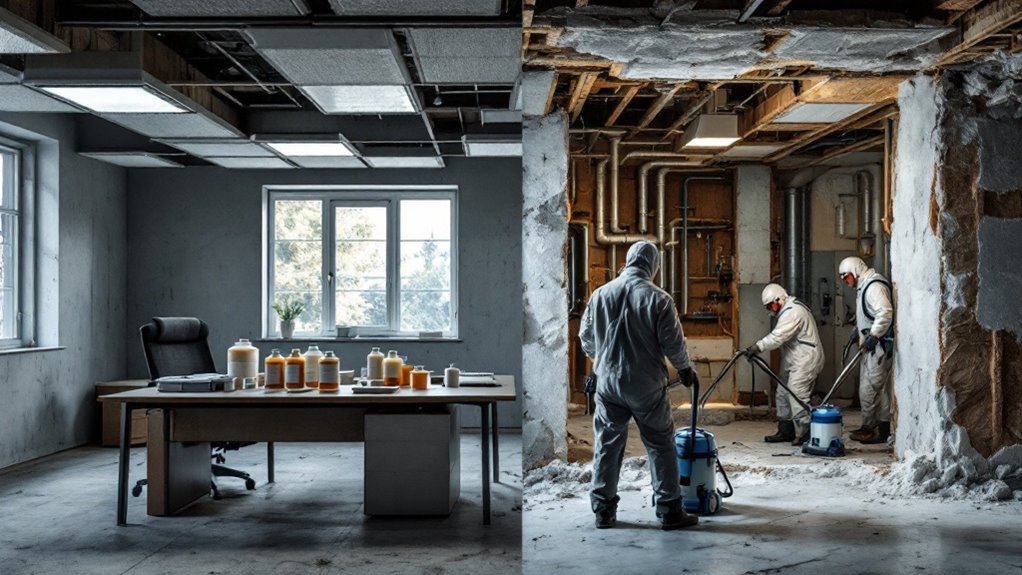
A management survey helps you identify asbestos-containing materials that could be disturbed during normal occupancy and routine maintenance. A refurbishment survey is more intrusive, and you use it when you plan renovation or demolition so you can locate asbestos in all affected areas before work starts. You need to choose the correct survey type since each one serves a different risk-control purpose and supports safe project planning. AirPro’s certified professionals provide accurate assessment before action to ensure your renovation or demolition project is planned effectively and in full compliance with regulatory requirements.
Management Survey Purpose
While both surveys identify asbestos-containing materials, the management survey serves a different purpose than a refurbishment survey: it assesses the presence, location, and condition of asbestos in normal occupied use so you can manage risk in place, whereas a refurbishment survey is a more intrusive inspection designed to find all asbestos that could be disturbed by planned work. You rely on it to maintain an accurate asbestos register, prioritize controls, and support routine maintenance decisions. Mastery depends on disciplined asbestos identification techniques and exact survey report interpretation. Professional asbestos abatement services ensure proper identification and regulated disposal when removal becomes necessary.
- Verify material condition and accessibility.
- Record locations with sufficient detail for ongoing control.
- Update the register after any change in fabric or occupancy.
Refurbishment Survey Purpose
Since you plan to disturb the building fabric, a refurbishment survey has a different goal from a management survey: it identifies asbestos-containing materials that could be exposed, damaged, or removed during the planned work, including hidden or inaccessible areas that routine occupancy surveys may not inspect. You use it to define the work zone, quantify risk, and prevent uncontrolled fiber release before demolition or strip-out begins. Its survey methodologies are more intrusive, often requiring selective opening-up, as surface-only inspection won’t suffice. You gain refurbishment benefits by informing scope, sequencing, and control measures, while giving contractors reliable data for safe execution. Unlike a management survey, this survey supports project-ready decision-making, not day-to-day asset control. You should treat it as a prerequisite for any invasive refurbishment plan.
When Is a Survey Required by Law?
If you plan to renovate or demolish a building, the law often requires an asbestos survey before work begins. You should treat this as a compliance checkpoint, not a formality. Under an asbestos regulations overview, the duty usually arises when you disturb a structure built before prohibition dates or when you alter materials during intrusive work. The legal implications are significant: regulators can halt the project, issue penalties, and expose you to liability.
A survey is typically required when:
- You remove structural elements.
- You penetrate concealed building fabric.
- You demolish, in whole or in part.
You need documented evidence from a competent surveyor before contractors mobilize. If you ignore the requirement, you risk enforcement action and project delay.
Which Materials May Contain Asbestos?
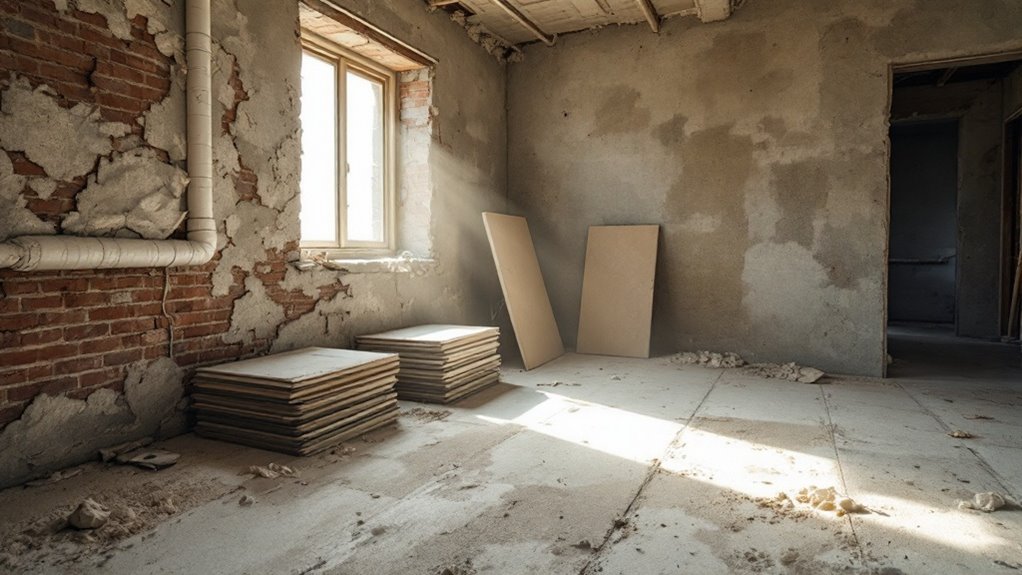
Asbestos can be present in many building materials, especially in older structures, so you can’t assume any surface is safe without verification. You should treat insulation, pipe wrap, sprayed fireproofing, ceiling tiles, vinyl flooring, roofing felts, mastics, joint compound, textured coatings, and cement products as common asbestos containing materials. You additionally need to take into account wallboard, plaster, gaskets, and refractory materials when renovation or demolition disturbs hidden assemblies. Visual inspection alone won’t confirm content; you must rely on asbestos identification techniques such as material sampling, polarized light microscopy, and transmission electron microscopy. Even intact materials can release fibers when cut, drilled, or abraded. Consequently, you should map suspect components before work starts, as accurate identification controls exposure risk, supports compliant planning, and prevents costly project delays.
Who Can Carry Out an Asbestos Survey?
A qualified asbestos surveyor or licensed inspection firm should carry out the survey before you renovate or demolish any suspect structure. You need an accredited professional who understands asbestos regulations, sampling protocols, and contamination control. If you hire unqualified personnel, you risk incomplete findings and inflated survey costs later.
Choose a provider that can:
- Document training, accreditation, and insurance.
- Use calibrated tools and chain-of-custody procedures.
- Deliver a written report that identifies accessible suspect materials.
You should verify local licensing requirements, as some jurisdictions restrict who may inspect, sample, or advise on asbestos-containing materials. A competent surveyor works methodically, minimizes disturbance, and maintains defensible records. That rigor gives you reliable data and keeps your project aligned with legal and technical expectations.
How Survey Results Affect Your Project
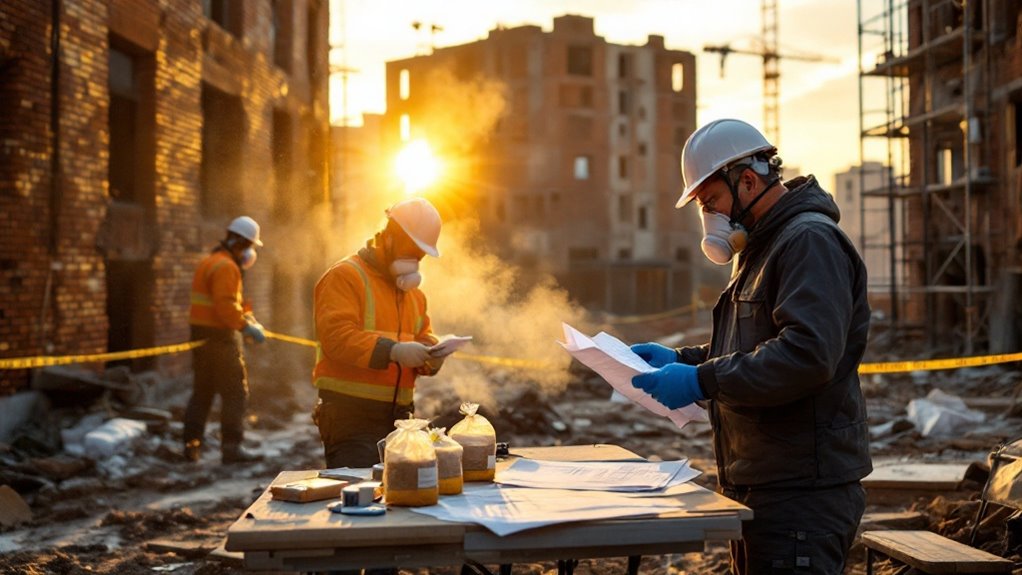
Survey results directly shape your renovation or demolition plan, as they tell you where asbestos is present, what condition it’s in, and which areas need control measures before work starts. You use that data to sequence tasks, isolate affected zones, and specify abatement before intrusive work.
| Result | Project impact |
|---|---|
| Friable material | Requires immediate containment |
| Intact material | Needs monitoring and limited disturbance |
| Hidden locations | Triggers targeted access planning |
| Bulk sample confirmation | Guides disposal and sequencing |
These findings likewise determine whether you must revise scope, budget, and schedule to stay aligned with asbestos regulations. By integrating the report early, you protect renovation safety and keep contractors working within defined exposure boundaries. Clear interpretation lets you execute with control, precision, and compliance throughout the project.
What Happens If You Skip the Survey?
Skipping the survey leaves you without verified information about asbestos location, condition, and quantity, so you’re forced to plan work around unknown hazards. That uncertainty raises the probability of asbestos exposure and exposes workers, occupants, and adjacent areas to avoidable health risks.
- You may disturb hidden ACM during demolition or intrusive renovation.
- You can’t define safe work methods, containment, or disposal requirements with confidence.
- You risk delays, stop-work orders, and corrective abatement after contamination occurs.
Without survey data, you lose the evidentiary basis for competent risk control. In practice, that means you’re managing liability, not the hazard. If materials release fibers, the cleanup burden escalates, and your project timeline slips further. Mastery starts with verified conditions, as unknowns create operational, legal, and medical exposure.
How Do You Book an Asbestos Survey?
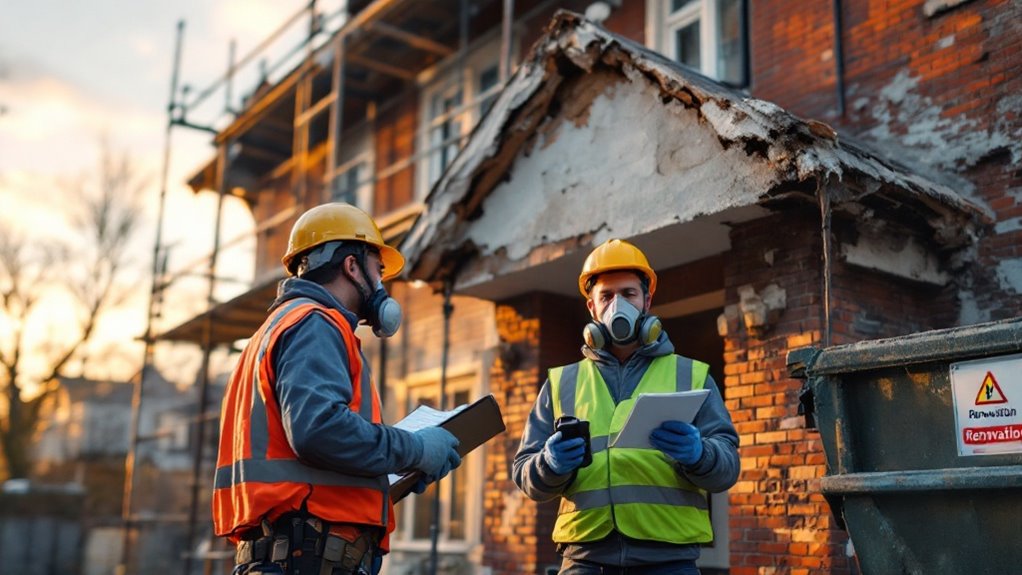
To book an asbestos survey, you should choose an accredited surveyor with demonstrable experience in pre-renovation and demolition assessments. You’ll need to provide accurate property details, including the building type, age, layout, and planned works, so the surveyor can define the correct scope. After that, you can schedule a site visit to verify suspect materials and complete the inspection.
Choose Accredited Surveyors
When you book an asbestos survey, choose an accredited surveyor with clear competence in pre-renovation and demolition assessments. You should verify certification standards and compare surveyor qualifications before you authorize work. Accreditation alone isn’t enough; you need documented training, site experience, and independence from removal contractors. A credible provider will explain the survey scope, legal framework, and reporting format without ambiguity.
- Confirm the surveyor holds current accreditation from a recognized body.
- Check that their qualifications match the building type and project risk.
- Demand a report that identifies suspect materials, limitations, and next-step controls.
This diligence reduces error, supports compliance, and gives you defensible evidence before disruptive works begin.
Request Property Details
After you’ve confirmed the surveyor’s accreditation and competence, the next step is to provide complete property details so they can scope the asbestos survey correctly. You should supply the address, construction date, current use, and any known refurbishments. Include property history and a precise renovation timeline, as each change can alter asbestos risk and survey boundaries.
| Detail | Why it matters | Best form |
|---|---|---|
| Build era | Predicts likely ACMs | Documented date |
| Past works | Identifies disturbed materials | Dated records |
| Planned scope | Defines survey extent | Drawings/specification |
If you omit records, you increase uncertainty and may force conservative assumptions. Give the surveyor access to drawings, lease plans, and previous reports so they can classify risk efficiently and quote accurately. Clear data shortens validation and improves survey scope.
Schedule Site Visit
Book the site visit once the surveyor has your property details, scope, and access requirements, as they can only allocate the right team and method after those inputs are confirmed. You’ll then receive a confirmed inspection window, liaison contact, and any pre-entry instructions. Prepare the site carefully so the surveyor can verify suspect materials without delay. Follow these steps:
- Clear locked areas, utility rooms, and roof access points.
- Provide drawings, phased demolition plans, and known asbestos records.
- Implement safety measures, including exclusion zones and informed occupants.
You should likewise confirm whether power, lighting, and escorts will be available during inspection. Precise scheduling reduces rescheduling risk, supports compliant sampling, and lets the surveyor execute the assessment efficiently.
Signs You Need a Survey Before Work Starts?
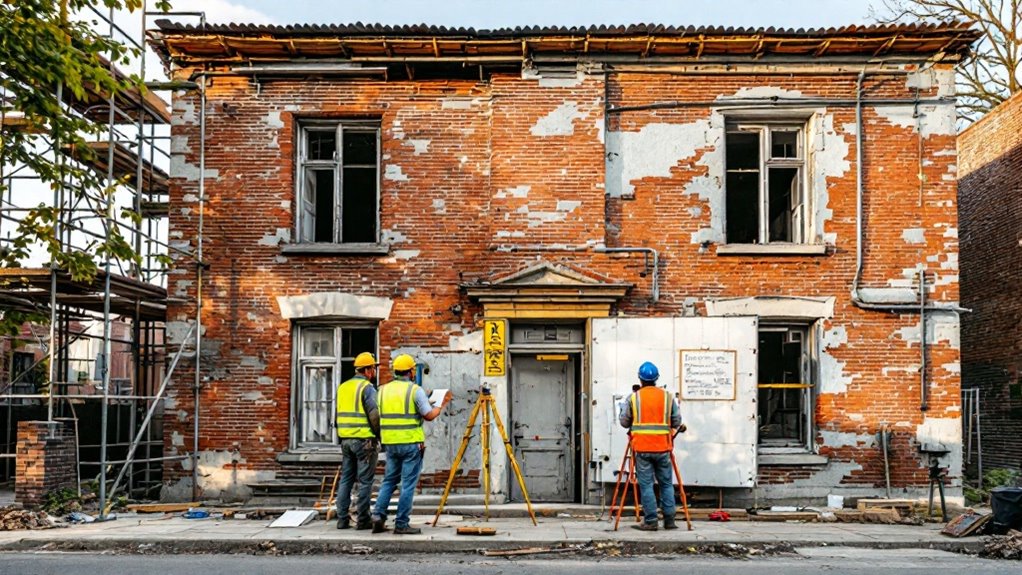
Could your project disturb asbestos-containing materials? You need a survey before work starts if you’re opening walls, removing ceilings, cutting pipe insulation, or disturbing older floor tiles, mastics, plaster, or roofing. Increased risk exists in buildings built before modern asbestos bans, especially when no prior survey documents the structure. If you see deteriorated insulation, patched repairs, or legacy fireproofing, treat the material as suspect. Asbestos awareness helps you recognize these triggers before you expose workers or occupants. You should additionally order a survey when records are incomplete, renovation scopes have changed, or demolition will create widespread disturbance. Don’t rely on visual inspection alone; fibers can’t be confirmed by sight. Survey costs are minor compared with enforcement actions, delays, or abatement expenses after unintended exposure.
Frequently Asked Questions
Can I Test Materials Myself Before Hiring a Surveyor?
You can do DIY Testing, but Safety Concerns make it unwise; you may disturb asbestos, contaminate your space, and get unreliable results. Use a qualified surveyor first, then you’ll get compliant, defensible sampling.
How Long Does an Asbestos Survey Usually Take?
You’ll usually wait a few hours to a day; a large warehouse survey can stretch to several days. Survey duration depends on access, asbestos types, and sampling needs, so you should plan accordingly.
Will a Survey Delay My Renovation Schedule?
Yes, a survey can delay your renovation schedule if you don’t plan for survey timelines. You’ll minimize disruption by integrating renovation planning early, booking promptly, and factoring report turnaround into your critical path.
Is Asbestos Always Dangerous if Left Undisturbed?
Asbestos isn’t always dangerous if undisturbed; stable, sealed materials often remain low risk. You’ll still need caution, since asbestos exposure risks rise when damage, drilling, or deterioration occurs, and undisturbed materials safety isn’t absolute.
Do Landlords Need Surveys Before Tenant Improvements?
Yes—you often need a survey before tenant improvements if you’ll disturb suspect materials. You must confirm tenant responsibilities and legal obligations, as owners and tenants can share compliance duties under applicable asbestos regulations.
Conclusion
Before you start any renovation or demolition, arrange an asbestos survey if your building was constructed before 2000 or if you will disturb hidden materials. One useful statistic: asbestos still causes about 5,000 deaths each year in the UK, which shows why verification matters. A proper survey identifies ACMs, reduces exposure risk, and keeps your project compliant. Don’t assume newer-looking finishes are safe—confirm first, then work with confidence.