
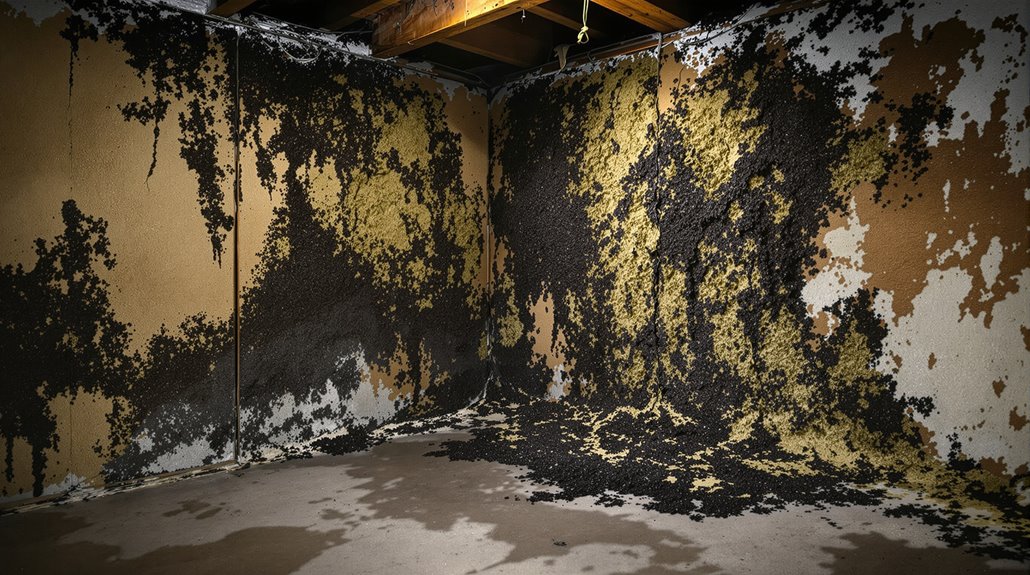
You can handle mold yourself when it covers less than 10 square feet on a non-porous surface like tile or glass. But once it exceeds that threshold, spreads to porous materials like drywall or wood, returns after DIY treatment, or follows water damage, you need professional remediation. Unexplained respiratory symptoms in your household are likewise a serious warning sign. Keep going to understand exactly what separates a minor fix from a major mold crisis.
Key Takeaways
- Mold exceeding 10 square feet in area requires professional remediation to ensure safe, thorough removal.
- Mold growing on porous materials like drywall, insulation, or wood demands professional intervention.
- Persistent mold recurrence after DIY treatment signals deeper issues requiring professional assessment.
- Mold resulting from flooding or sewage damage carries heightened contamination risks needing expert handling.
- Unexplained respiratory symptoms in household members may indicate serious mold exposure requiring professional remediation.
What Counts as Minor Mold You Can Handle Yourself
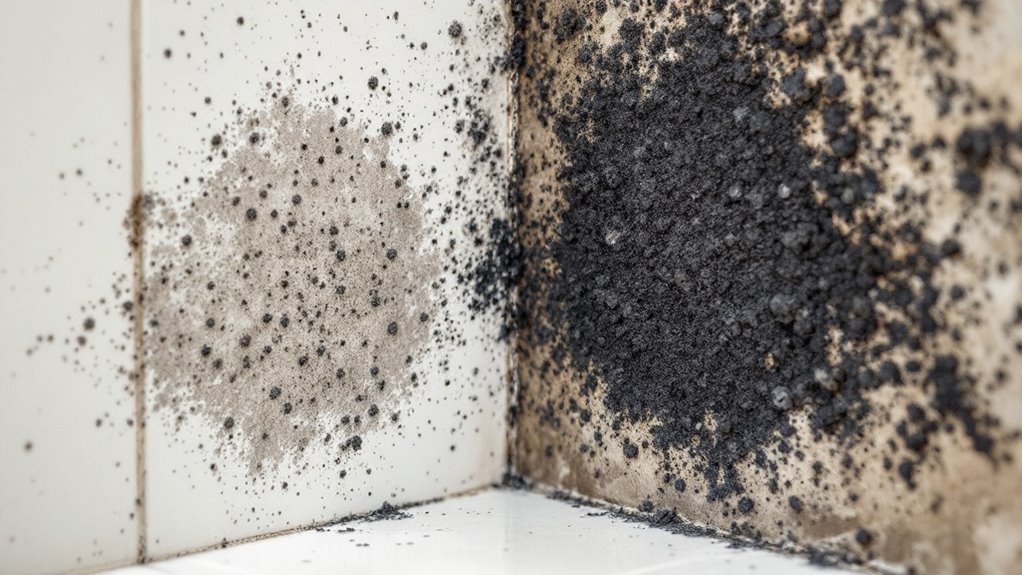
Not all mold problems require a professional—small, isolated patches on non-porous surfaces are typically something you can address yourself. Minor mold identification starts with evaluating size: if the affected area measures less than 10 square feet, you’re likely dealing with a manageable situation. Look for surface-level discoloration on tiles, glass, or sealed countertops.
Safe removal methods for minor mold include applying an EPA-registered antifungal cleaner or a diluted bleach solution (1 cup bleach per gallon of water). Wear nitrile gloves, an N-95 respirator, and safety goggles before you begin. Scrub thoroughly, dry the surface completely, and monitor for recurrence. If mold returns within two weeks, that’s your signal that a deeper, systemic issue exists beneath the surface. For persistent mold problems, organic enzyme treatment offers a chemical-free solution that safely eliminates mold spores and mycotoxins while improving indoor air quality.
Clear Signs Your Mold Problem Needs Professional Remediation
When mold exceeds 10 square feet, spreads across porous materials like drywall, insulation, or wood framing, or returns persistently after DIY treatment, you’re dealing with a problem that’s beyond surface-level remediation. Certain mold types, including Stachybotrys chartarum and Aspergillus, present serious health risks requiring certified intervention.
You’ll likewise need professional remediation if mold follows water damage from flooding or sewage, since contamination typically penetrates structural cavities invisible to untrained eyes. If household members experience unexplained respiratory symptoms, headaches, or chronic fatigue, don’t dismiss the correlation. Similar to how early detection of asbestos-related diseases prevents severe health complications, addressing mold problems promptly can prevent long-term respiratory damage and protect household health.
Professionals use containment barriers, negative air pressure systems, and HEPA filtration to prevent cross-contamination during removal. Recognizing these thresholds protects your household and guarantees remediation is thorough, not just cosmetic.
Why DIY Mold Removal Can Backfire Without Expert Help
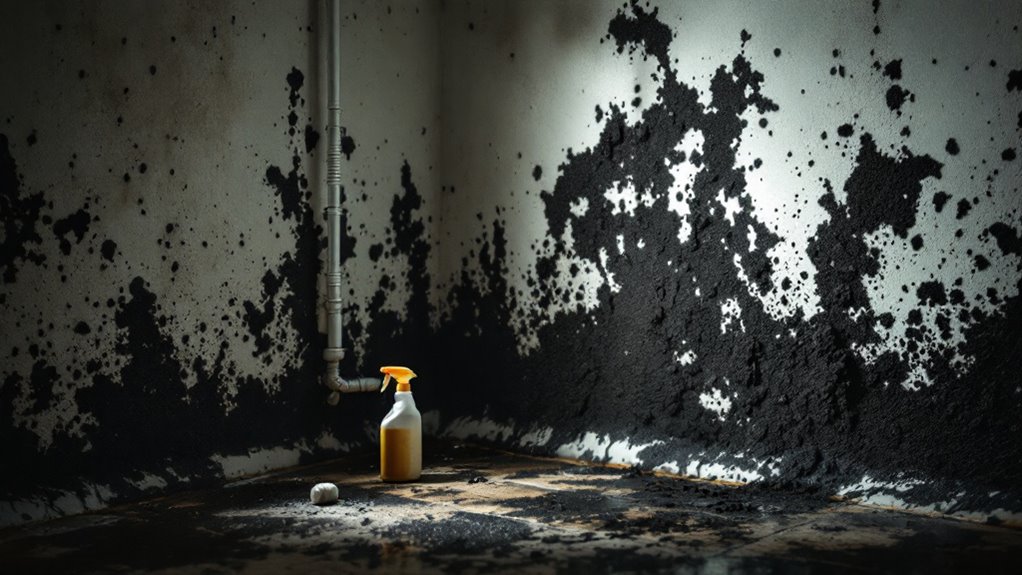
Although you recognize the warning signs and decide to tackle mold yourself, the remediation process itself carries risks that can worsen the problem considerably. Improper removal techniques disturb mold colonies, releasing concentrated mold spores into your air supply and spreading contamination beyond the original affected zone. Common mistakes include using bleach on porous surfaces, which masks discoloration without eliminating root structures, and neglecting proper containment barriers. These errors create secondary contamination sites throughout your home.
The health risks compound quickly. Without respirators rated for mycotoxin exposure and full protective gear, you’re inhaling particulates that trigger respiratory distress, neurological symptoms, and immune responses. Professionals use negative air pressure containment, HEPA filtration, and EPA-registered antimicrobials—methods your standard cleaning supplies can’t replicate. Attempting this alone puts both you and your household at measurable risk. Similar to how disturbing asbestos-containing materials releases harmful fibers that pose serious health threats, improper mold disturbance can have long-lasting consequences for your home’s safety and air quality.
How Professionals Actually Remediate a Mold Infestation
Professional mold remediation follows a structured, multi-phase protocol that goes far beyond surface cleaning. Certified technicians begin with advanced mold inspection techniques, including thermal imaging, moisture mapping, and air quality sampling to identify hidden colonies you can’t see.
Next, they establish containment zones using negative air pressure barriers, preventing cross-contamination to unaffected areas. Remediation equipment types deployed include HEPA-filtered air scrubbers, industrial dehumidifiers, and antimicrobial fogging systems—tools that eliminate spores at the microscopic level.
Technicians then remove compromised materials following EPA guidelines, treating structural surfaces with EPA-registered biocides. Post-remediation, they conduct clearance testing to verify spore counts meet safe thresholds. This systematic approach protects your household’s health and guarantees the infestation doesn’t return. Professional remediation teams utilize state-of-the-art equipment and continuous training to ensure rigorous procedures that create healthier living environments for your family.
What Mold Remediation Costs and How to Choose a Contractor
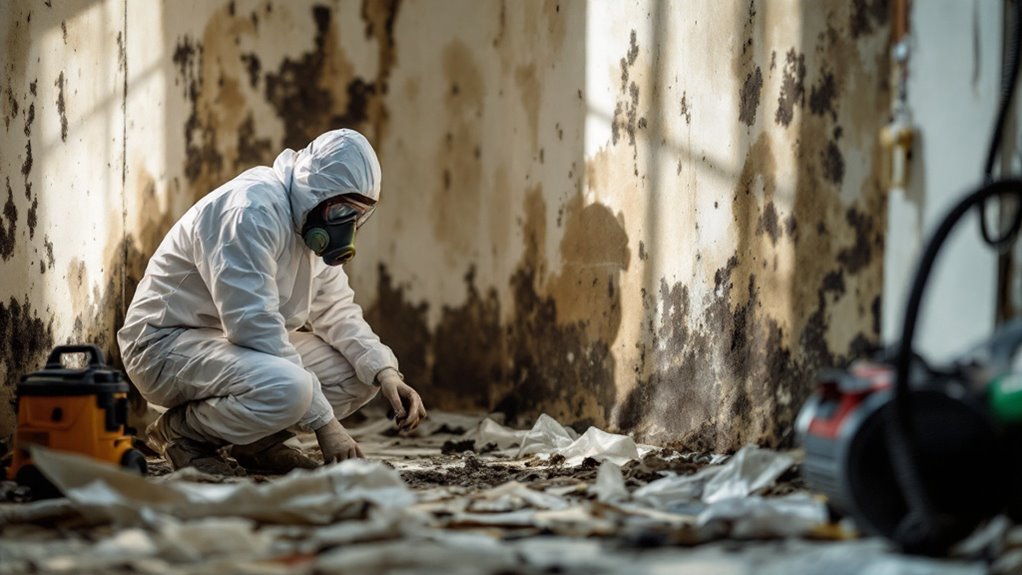
Mold remediation costs vary widely depending on infestation size, location, and material damage—typically ranging from $500 for minor surface treatment to $30,000 or more for severe structural involvement. Mold inspection costs alone run $300–$500 before remediation begins. When you’re selecting a contractor, verify contractor qualifications carefully—look for IICRC certification, liability insurance, and documented experience with your specific mold type. Request itemized written estimates from at least three contractors, and avoid anyone recommending remediation before completing a thorough inspection. Reputable contractors provide post-remediation testing to confirm clearance. Your community deserves contractors who follow EPA and OSHA guidelines without cutting corners. Like asbestos abatement, understanding financial assistance options can help alleviate the burden of remediation costs for homeowners facing unexpected expenses. Red flags include unusually low bids, pressure tactics, and reluctance to provide references. Choosing carefully protects your home, your health, and your investment.
Frequently Asked Questions
Can Mold Exposure Cause Long-Term Health Effects in Children?
Yes, mold exposure can cause long-term health effects in children. You’ll notice mold symptoms impacting children’s health through respiratory issues. Addressing environmental factors early and adopting prevention strategies protects your family’s well-being effectively.
How Quickly Does Mold Typically Spread Throughout a Home?
Like wildfire consuming dry brush, mold’s growth timeline can overtake your home in 24–48 hours. Factors influencing spread include humidity, temperature, and organic materials—you’ll see full colonization within 1–3 weeks.
Does Homeowner’s Insurance Usually Cover Professional Mold Remediation Costs?
Your homeowner’s insurance policies typically won’t cover remediation costs unless mold results from a sudden, covered peril. You’ll need to review your specific policy carefully, as exclusions often apply to gradual moisture damage or neglected maintenance issues.
Can Mold Grow Inside Walls Without Any Visible Signs Outside?
Yes, hidden mold can thrive inside your walls without visible external signs. You’ll need a professional wall inspection to detect moisture levels and microbial growth accurately, ensuring your home’s integrity remains protected and your family’s health isn’t compromised.
Are Certain Climates or Regions More Prone to Household Mold Growth?
Studies show 70% of homes contain mold. If you’re in humid coastal or southern regions, you’ll face higher humidity levels and greater mold risks. You’ll need targeted prevention strategies to protect your home effectively.
Conclusion
Knowing when to call a professional isn’t just smart—it’s your home’s lifeline. If you’re staring down mold covering more than 10 square feet, hiding behind walls, or returning after repeated DIY attempts, you’ve crossed the threshold where caution becomes critical. Don’t let indecision turn a contained problem into a structural catastrophe. You’ve got the facts now—use them to make a precise, timely decision that protects both your property and your health.