
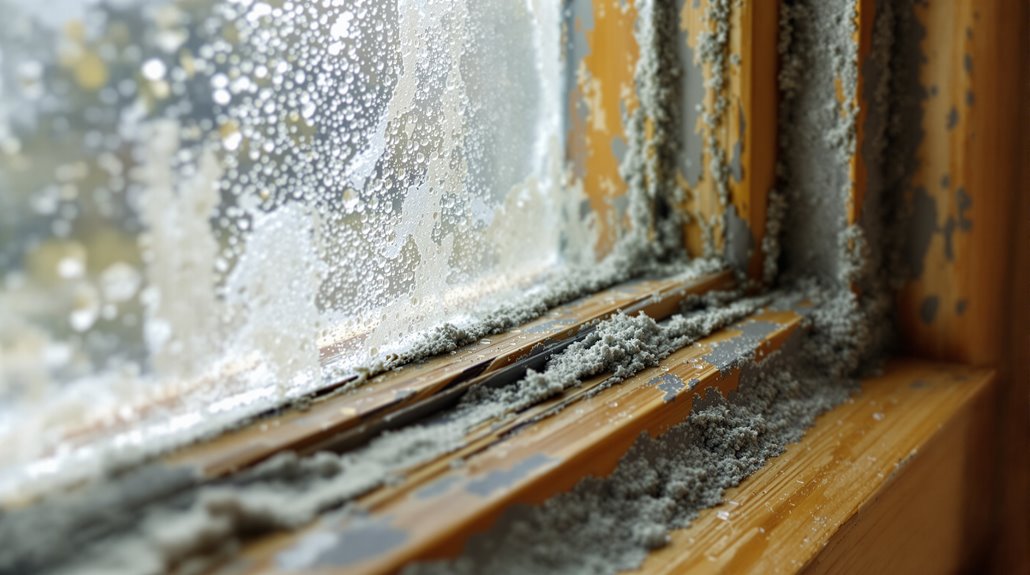
Georgia’s subtropical humidity keeps indoor materials damp for much of the year, so you’re fighting mold almost continuously. When warm, moist air hits cooler surfaces, condensation forms, and mold spores can germinate within 24 to 48 hours if humidity stays above about 60%. Aging HVAC systems, poor ventilation, and construction defects can trap moisture inside. Keeping indoor humidity below 50% and fixing hidden moisture sources is the key to stopping recurrence, and there’s more to know.
Key Takeaways
- Georgia’s warm, humid climate keeps indoor moisture high for most of the year, allowing mold to grow כמעט continuously.
- Humid air condenses on cooler surfaces like windows, ducts, and walls, creating moisture that mold spores need to germinate.
- Relative humidity above 60% near surfaces can sustain hidden mold growth inside drywall, wood, and other porous materials.
- Aging HVAC systems, poor ventilation, and construction defects can trap moisture indoors and worsen persistent mold problems.
- Keeping indoor humidity below 50% with dehumidifiers, exhaust fans, and moisture monitoring is essential to prevent recurring mold.
How Georgia’s Climate Fuels Year-Round Mold
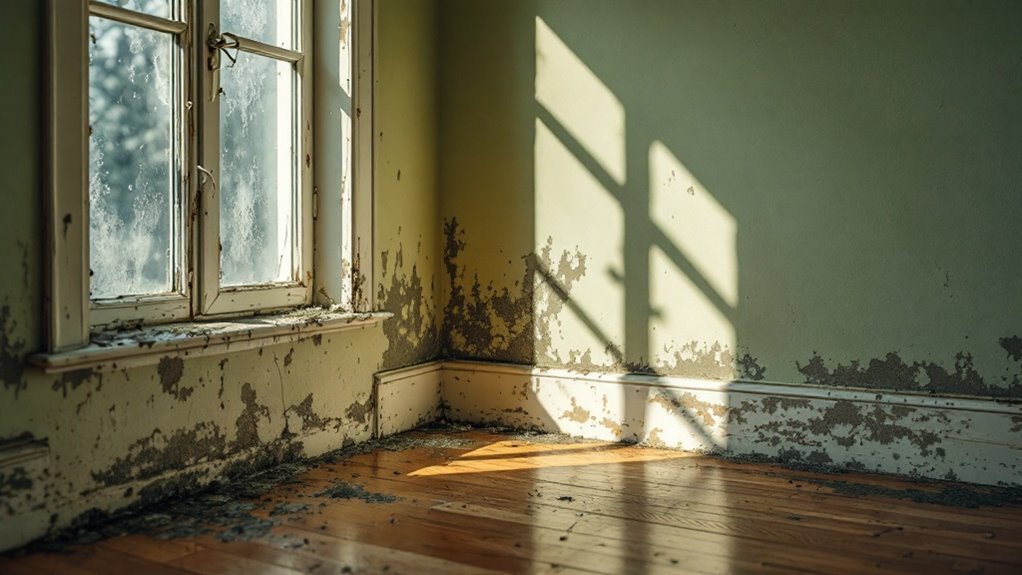
Owing to Georgia sitting at the intersection of subtropical humidity and prolonged warm seasons, your home faces mold-friendly conditions nearly ten months a year. You’re dealing with average relative humidity levels that routinely exceed 60%, the threshold at which mold spores germinate and colonize organic surfaces within 24 to 48 hours. Coastal and inland regions alike experience minimal winter reprieve, meaning your mold prevention strategies can’t rely on seasonal dormancy.
You need climate adaptation techniques that account for Georgia’s specific dew point patterns, not generic humidity control advice. This means monitoring indoor moisture year-round, not just during summer months. Your HVAC system must actively dehumidify rather than simply cool, since standard air conditioning cycles often leave residual moisture that sustains mold growth between cooling cycles. When mold does develop despite preventive efforts, post-remediation air testing confirms whether your space has been restored to safe spore levels.
How Humidity Turns Into Indoor Mold
When Georgia’s humid air contacts cooler indoor surfaces—windows, ductwork, or exterior walls—water vapor condenses into liquid moisture you often can’t see until it’s too late. That thin film of condensation gives mold spores, which already float through your indoor air, the exact conditions they need to germinate and colonize. Once relative humidity near a surface stays above 60% for even a few hours, you’ve created a microclimate where mold can take hold and spread across drywall, insulation, or wood framing. Professional mold assessment and containment services can identify these hidden moisture zones before they become costly remediation problems.
Moisture Meets Surface Condensation
Since warm Georgia air holds far more water vapor than cool air, that vapor turns to liquid the instant it contacts a surface colder than the dew point—your bathroom mirror, a basement wall, or the ductwork behind a closet ceiling. This condensation effect depends entirely on surface temperature relative to indoor climates, and it concentrates at predictable condensation points wherever thermal bridging exists in your building materials. AirPro’s indoor air quality services evaluate moisture and environmental factors to identify and address these condensation vulnerabilities before they develop into persistent mold problems.
| Condensation Point | Root Cause |
|---|---|
| Window glass | Low surface temperature vs. indoor humidity |
| Exterior wall corners | Thermal bridging through framing |
| Ductwork in closets | Cold air contacting warm surfaces |
| Basement walls | Ground-cooled masonry |
| Attic rafters | Poor air circulation |
Addressing these humidity impacts requires targeted surface treatment and improved airflow before moisture accumulation invites mold growth.
Spores Thrive In Dampness
Since mold spores exist virtually everywhere in ambient air, they don’t need to be introduced into your home—they need only the right conditions to activate and colonize. When relative humidity at a surface exceeds 60% for extended periods, dormant spores germinate, sending out hyphae that penetrate organic substrates like drywall paper, wood, and dust-laden insulation.
Spore reproduction accelerates exponentially once colonization begins: a single colony can release millions of new spores within 24-48 hours, each capable of establishing satellite growth wherever moisture persists. This explains why Georgia’s humid interiors often show mold variety spanning multiple genera—Aspergillus, Penicillium, Stachybotrys—each exploiting slightly different moisture thresholds and substrate preferences.
Professional moisture source identification ensures that underlying water intrusion is located and addressed, preventing mold from returning even after initial remediation. Controlling humidity below 50% disrupts this reproductive cycle before colonization takes hold, preventing spores from evolving into active, spreading infestations.
What Humidity Level Actually Triggers Mold in Your Home?
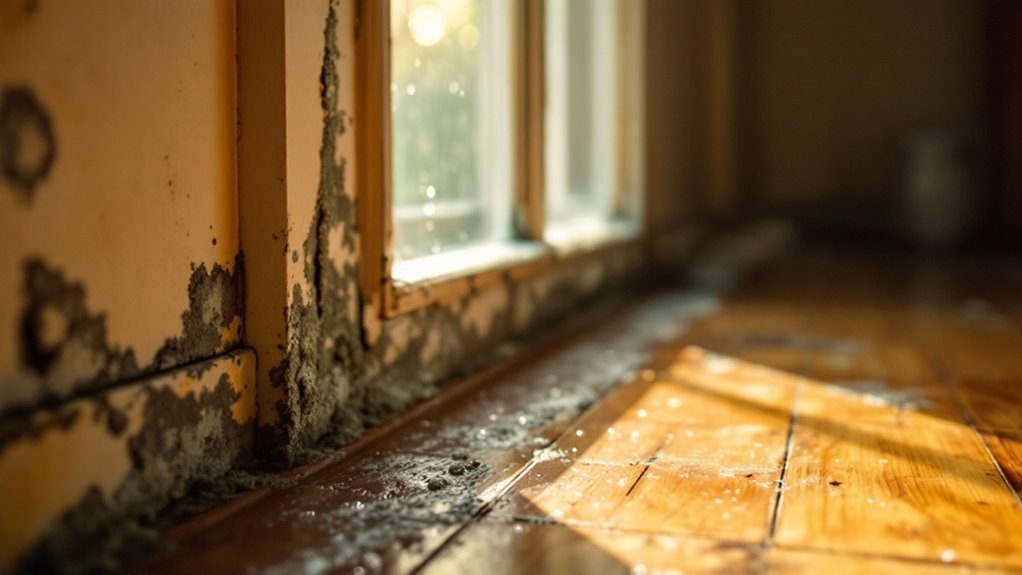
Where exactly does mold start growing in your Georgia home? Relative humidity above 60% for extended periods creates the threshold most mold species need to activate spore germination. At 70% RH, growth accelerates considerably on organic materials like drywall paper and wood framing. Your target range should stay between 30-50% to keep surfaces inhospitable to fungal colonization.
Effective mold prevention strategies start with understanding this isn’t guesswork—it’s measurable science. Humidity monitoring devices, specifically hygrometers placed in bathrooms, basements, and closets, give you real-time data instead of assumptions. Georgia’s ambient humidity often exceeds 65% during summer months, meaning indoor levels can spike without proper dehumidification. Track readings consistently, and you’ll catch problem zones before visible growth appears, addressing conditions rather than symptoms after the fact. When moisture problems persist despite your efforts, industrial mold remediation services can assess your building’s specific conditions and implement containment and HEPA cleaning solutions tailored to your space.
How Aging HVAC Systems Feed Mold Growth
Your hygrometer readings tell only half the story—the equipment controlling your indoor climate matters just as much as the numbers it produces. An aging HVAC system loses dehumidification capacity long before it fails outright, and that gradual decline creates ideal conditions for mold colonization.
Watch for these warning signs:
- Undersized units cycling too quickly to extract moisture
- Dirty coils reducing latent heat removal efficiency
- Clogged air filtration systems restricting airflow and promoting condensation
- Leaky ductwork introducing humid attic or crawlspace air
- Neglected HVAC maintenance schedules allowing drain lines to clog
Each malfunction compounds humidity problems your thermostat can’t detect. A system rated for adequate cooling still fails at moisture control if maintenance lapses. Schedule seasonal inspections targeting coil condition, refrigerant charge, and filtration integrity—these directly determine your building’s mold resistance. When system failures create persistent moisture issues, professional air quality investigations can identify whether underlying building conditions are contributing to mold growth and recommend coordinated corrective actions.
How Poor Ventilation Traps Moisture Indoors
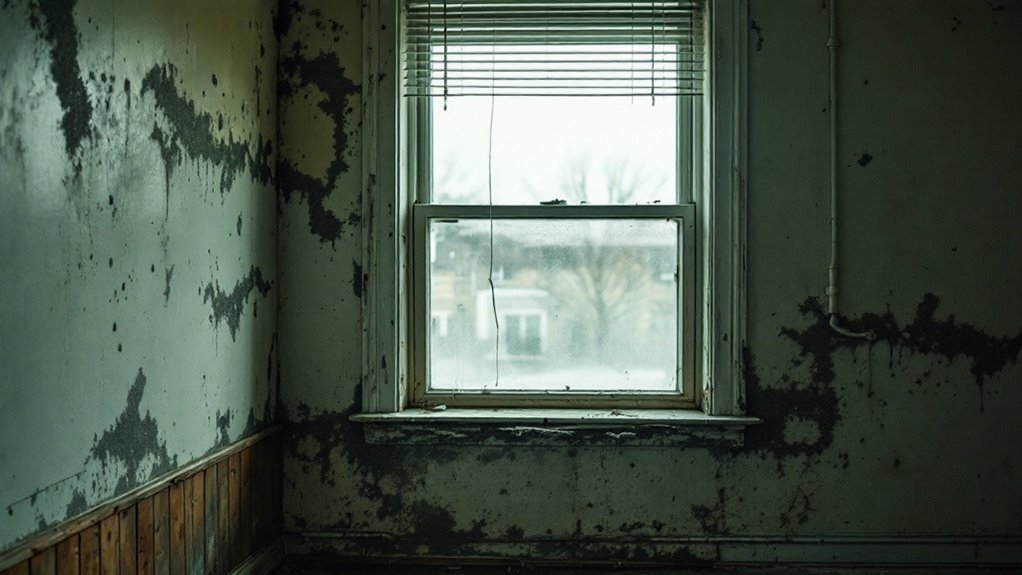
Since Georgia’s building codes historically favored tight envelopes for energy efficiency, many homes trap moisture-laden air with nowhere to go. You’ll find bathrooms, kitchens, and laundry rooms generating vapor that lingers without adequate exhaust pathways, condensing on cool surfaces and feeding mold colonies within 24-48 hours.
Effective ventilation strategies require more than opening windows sporadically. You need mechanical exhaust fans rated for your room’s cubic footage, ducted directly outside rather than into attic spaces where moisture simply relocates. Bathroom fans should run 20-30 minutes post-shower; kitchen hoods need consistent use during cooking.
Whole-house moisture management demands balanced air exchange—supply and exhaust systems working together, not fighting your HVAC’s dehumidification efforts. Consider ERV or HRV installation if you’re sealing your envelope further, since tighter construction without corresponding ventilation upgrades guarantees moisture accumulation and subsequent fungal growth. Professional indoor air quality assessments can identify ventilation deficiencies and moisture sources before they develop into costly mold infestations.
Construction Mistakes That Let Mold In
Even well-designed HVAC systems can’t compensate for structural errors baked into your home’s construction. When builders install vapor barriers incorrectly—placing them on the wrong side of insulation or leaving gaps at seams—you end up trapping moisture inside wall cavities instead of blocking it. Similarly, if your attic lacks properly calculated intake and exhaust ventilation ratios, you’re left with stagnant, humid air that condenses on framing and sheathing, creating ideal conditions for mold colonization. Professional environmental inspection services can identify these construction defects before they lead to extensive mold damage in your home.
Poor Vapor Barrier Installation
Crawl spaces and basements across Georgia routinely trap moisture since builders install vapor barriers incorrectly or skip critical seams entirely. Improper overlap, unsealed penetrations, and torn sheeting let ground moisture migrate straight into your structure, feeding mold colonies you can’t see until damage surfaces.
Correct vapor barrier materials and installation techniques determine whether your crawl space stays dry or becomes a mold incubator. You need:
- 6-mil or thicker polyethylene sheeting rated for continuous ground contact
- Overlapped seams (minimum 12 inches) sealed with vapor-rated tape
- Complete coverage extending up foundation walls, not just floor areas
- Sealed penetrations around piers, pipes, and support posts
- Mechanical fastening that prevents shifting or tearing over time
Skipping any element compromises the entire system, allowing humidity to bypass your barrier and condense on wood framing, where mold growth accelerates within 48-72 hours. Professional environmental inspections can identify moisture and vapor barrier failures before mold colonies become established in your crawl space or basement.
Inadequate Attic Ventilation Design
As a result of builders often prioritizing aesthetics over airflow, your attic can become a humidity trap that rivals any crawl space for mold potential. Continuous soffit-to-ridge airflow management moves roughly 1 cubic foot of air per minute per square foot of attic floor, a benchmark most Georgia homes never achieve. Without balanced intake and exhaust venting, summer heat and humidity stagnate under your roofline, condensing against sheathing once nighttime temperatures drop.
You’ll additionally see attic insulation blocking soffit vents entirely, cutting off intake air and forcing whatever exhaust vents exist to pull conditioned indoor air upward instead. This reverses your ventilation’s purpose, drawing moisture-laden air into the attic rather than expelling it, and accelerates sheathing decay and mold colonization on rafters. When attic mold becomes established, professional mold remediation services can assess the extent of damage and safely address the contamination before it spreads further into your home’s structure.
Why Georgia Homes Face Extra Mold Risk
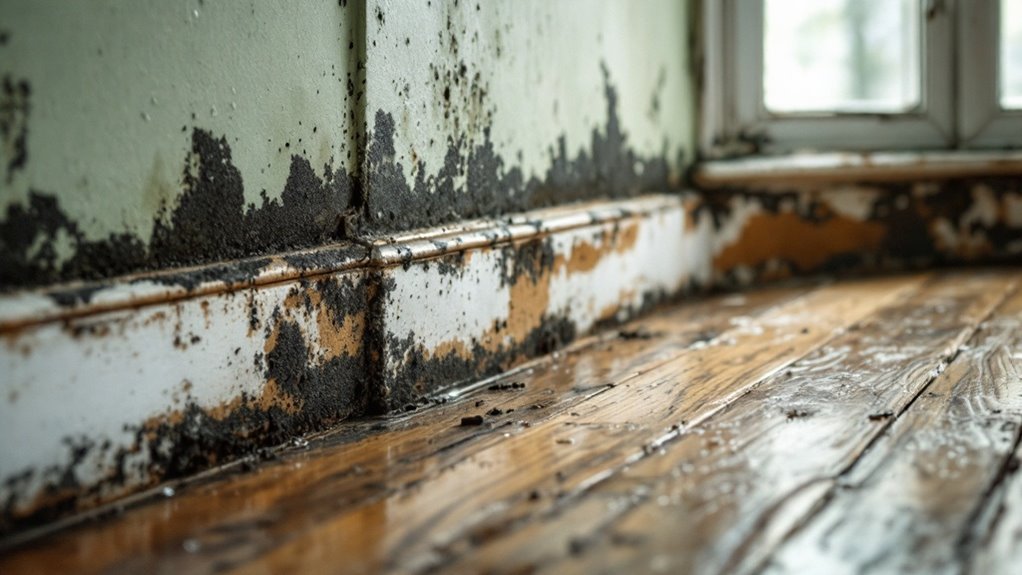
Since Georgia sits in a humid subtropical zone, your home fights a year-round battle against moisture that drier climates simply don’t face. Dew points routinely climb above 65°F for months, keeping building materials perpetually damp and pushing indoor relative humidity past the 60% threshold where mold spores germinate within 24-48 hours.
Your effective mold prevention strategies must account for these compounding regional factors:
- Extended cooling seasons that cycle HVAC condensation daily
- Clay soil composition that traps groundwater against foundations
- Frequent afternoon thunderstorms driving wind-blown moisture into wall assemblies
- Minimal winter drying periods to reset humidity baselines
- Dense tree coverage limiting sun exposure and airflow
Installing humidity monitoring tools throughout your home gives you the data-driven insight needed to intervene before condensation becomes colonization, transforming reactive remediation into proactive control.
Warning Signs Your Building Has Hidden Mold
Since hidden mold often thrives behind walls and beneath flooring long before it becomes visible, you need to recognize the subtler indicators that precede full-blown colonization. A persistent musty odor, especially in closed rooms, signals microbial activity even when surfaces look clean. Watch for discoloration or bubbling paint, which often marks hidden moisture sources trapped within wall cavities. Warped baseboards, soft drywall, or unexplained condensation on windows likewise indicate heightened humidity infiltration. Effective mold detection techniques include using a moisture meter to check wall cavities, thermal imaging to spot temperature anomalies linked to dampness, and air quality testing to measure spore concentration. If you notice recurring allergy symptoms indoors, don’t dismiss them—investigate promptly, since early detection prevents structural damage and costly remediation later.
Where Mold Hides Most in Humid Buildings

Four zones consistently harbor mold growth in Georgia’s humid buildings: HVAC ductwork, crawl spaces, attic sheathing, and wall cavities behind exterior-facing insulation. These mold hotspots share one trait: restricted airflow paired with condensation potential.
You’ll find hidden reservoirs of moisture wherever temperature differentials meet organic material:
- Duct interiors, where condensation forms on cool metal surfaces during summer cooling cycles
- Crawl space joists, exposed to ground moisture and poor ventilation
- Attic decking, where trapped heat meets roof leaks or vapor drive
- Wall cavities, especially behind vinyl siding with inadequate vapor barriers
- Subfloor insulation, saturated by plumbing leaks or capillary moisture
Inspect these zones with moisture meters and borescopes—visual surface checks alone miss subsurface colonization entirely.
Why Mold Keeps Coming Back After Cleaning
If you’re scrubbing visible mold but skipping the moisture source behind it, you’re only buying time before it returns. Surface cleaning kills what you can see, but microscopic spores embed in porous materials and survive most DIY treatments. Add Georgia’s humidity levels back into the equation, and those surviving spores rebuild entire colonies within days.
Hidden Moisture Sources Remain
When you scrub away visible mold but skip the source, you’re only buying time before it returns. Georgia’s humidity infiltrates spaces you can’t easily inspect, feeding fungal growth long after surface cleanup. Without targeted moisture detection, you’re treating symptoms while the underlying problem persists undisturbed.
Common hidden sources include:
- Hidden leaks inside wall cavities from aging pipe joints
- Condensation forming on ductwork in unconditioned crawlspaces
- Roof flashing failures allowing slow, undetected water intrusion
- Poor vapor barriers letting ground moisture migrate upward
- Improperly sealed window and door penetrations trapping humidity
Effective remediation requires thermal imaging and moisture meters to pinpoint these sources precisely. Guessing won’t cut it—you need data-driven detection that identifies exact locations before mold colonies re-establish. Address the mechanism, not just the manifestation, and you’ll break the cycle permanently.
Surface Cleaning Ignores Spores
Even after you’ve tracked down and fixed the moisture source, a bleach-and-water wipe-down leaves millions of microscopic spores embedded in porous surfaces. Drywall, wood, and grout all contain microscopic cavities that shield spores from surface-level disinfectants, demonstrating clear cleaning limitations you can’t overcome with elbow grease alone. Spore survival rates remain high as bleach’s chlorine molecules can’t penetrate deep enough to reach embedded colonies—you’re killing what’s visible while leaving the reservoir intact.
You need to address porosity directly: HEPA vacuuming, antimicrobial encapsulants, or physical removal of compromised material outperform surface treatments every time. If you’re dealing with drywall or insulation that’s absorbed moisture, replacement beats remediation. Testing post-cleanup with spore trap sampling confirms whether your intervention actually reduced viable colony counts, rather than just eliminating visible staining you noticed initially.
Humidity Rebuilds Mold Colonies
Since Georgia’s average relative humidity hovers between 65-75% for much of the year, any surface you clean today starts collecting new spore colonies within 24-48 hours if ambient moisture stays above 60%. You’re not fighting a one-time contamination event—you’re fighting a continuous mold lifecycle fueled by persistent humidity effects that reactivate dormant spores faster than surface cleaning can neutralize them.
Understanding this cycle changes your approach:
- Spore germination begins within hours when humidity exceeds 60% and organic material is present
- Hyphal growth accelerates in warm, moist microclimates behind walls
- Colony maturation occurs within 72 hours under sustained humidity
- Spore release restarts the cycle before you’ve finished cleaning
- Structural moisture in wood and drywall sustains growth long after visible cleanup
You need dehumidification, not just disinfection, to break this cycle permanently.
How to Break the Cycle of Recurring Mold
Since Georgia’s humidity never really takes a day off, a single mold remediation rarely solves the underlying problem. Breaking the cycle requires layered mold prevention techniques that address moisture at its source, not just visible spores. Pair mechanical dehumidification with effective cleaning methods that eliminate biofilm residue, since surface wiping alone leaves microscopic colonies intact.
| Action | Frequency | Target |
|---|---|---|
| Inspect HVAC condensate lines | Monthly | Standing water buildup |
| Run dehumidifiers below 50% RH | Continuous | Ambient moisture |
| Apply antimicrobial treatments | Quarterly | Porous surfaces |
| Audit crawlspaces/attics | Seasonal | Hidden condensation |
Consistency matters more than intensity—sporadic deep cleans won’t outpace Georgia’s relentless humidity cycles feeding recolonization.
Practical Ways to Control Indoor Humidity
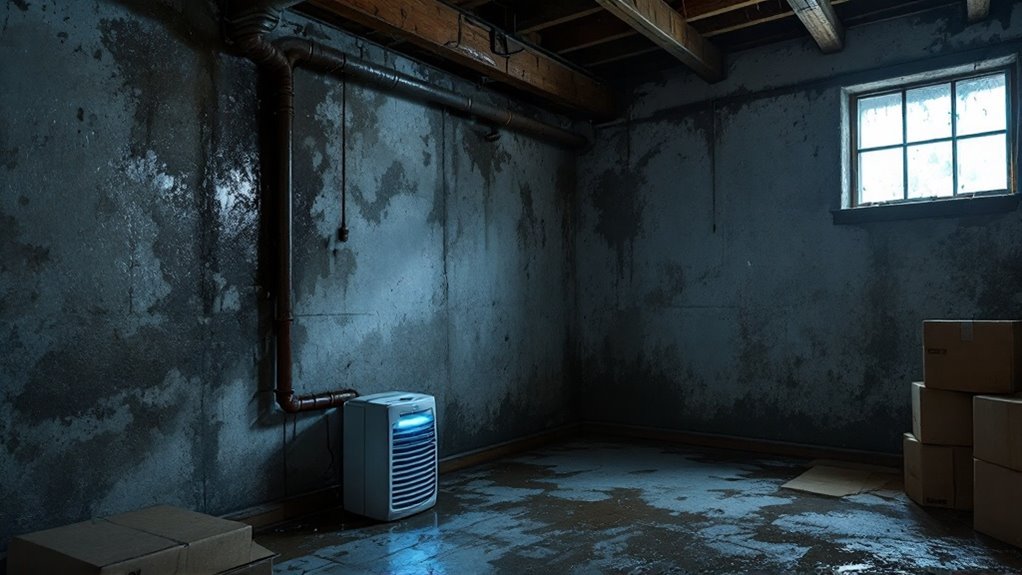
Since indoor humidity fluctuates with outdoor conditions, you’ll need measurement before intervention—a hygrometer placed in problem zones like basements or bathrooms gives you actual relative humidity data instead of guesswork. Once you’ve established baseline readings, target sustained levels below 50% to prevent mold colonization.
- Run dehumidifier usage continuously in enclosed spaces prone to moisture retention, emptying reservoirs or connecting drain lines for uninterrupted operation
- Position exhaust fans in bathrooms and kitchens, venting directly outside rather than into attic spaces
- Seal foundation cracks and window frames where humid air infiltrates
- Insulate cold surfaces to eliminate condensation points
- Maintain humidity monitoring logs weekly, adjusting equipment settings as seasonal conditions shift
You’ll gain control by pairing consistent measurement with targeted mechanical intervention, not sporadic fixes.
When to Call a Professional Mold Remediation Team
Once visible mold colonies exceed 10 square feet—roughly the size of a bathmat—you’re past the threshold for DIY treatment, according to EPA guidelines. At this stage, you need a certified mold inspection to identify species, moisture source, and structural penetration before remediation begins. Professionals use moisture meters, borescopes, and air sampling to map contamination beyond what you can see.
Certain conditions demand immediate professional intervention regardless of visible surface area:
| Trigger | Why It Matters |
|---|---|
| HVAC contamination | Spreads spores building-wide |
| Recurring growth after cleaning | Signals hidden moisture source |
| Occupant respiratory symptoms | Indicates active health risks |
Don’t underestimate hidden contamination—drywall cavities and subfloors often harbor colonies invisible during routine inspection.
Frequently Asked Questions
Can Mold Affect Indoor Air Quality Without Visible Growth?
Yes, mold can affect indoor air quality without visible growth since mold spores become airborne and contaminate your air. You’ll protect indoor health by controlling moisture, improving filtration, and inspecting hidden cavities regularly.
Does Georgia Humidity Worsen Mold in Commercial Buildings Too?
Yes—Georgia humidity can worsen mold in commercial buildings too, as you’ll trap commercial moisture in walls, ceilings, and HVAC systems. You should prioritize humidity management, monitor dew points, and control leaks to limit microbial growth.
Can New Construction Still Develop Mold Problems Quickly?
Yes—new construction can develop mold quickly if you don’t control building materials and moisture management. You should inspect for leaks, drying delays, and trapped humidity, as even fresh assemblies can support growth within days.
Are Dehumidifiers Enough to Prevent Mold Long-Term?
No—dehumidifiers alone rarely suffice. You’ll need smart moisture management and sealed surfaces; dehumidifier efficiency helps, but long term solutions require ventilation, leak control, insulation, and monitoring to keep humidity consistently below mold-supporting thresholds.
How Fast Can Mold Return After Moisture Exposure?
Mold can return in 24 to 48 hours after moisture exposure, once surfaces stay damp enough for the mold lifecycle to restart. You should control moisture retention fast, as spores germinate quickly under sustained humidity.
Conclusion
Georgia’s humidity doesn’t just make your home feel sticky—it keeps feeding mold behind walls, in ducts, and under flooring. If you don’t control indoor moisture, the problem can keep returning after every cleanup. The good news? You can break the cycle with better ventilation, steady dehumidification, and HVAC maintenance. But if stains, odors, or health symptoms keep coming back, don’t wait. The next hidden source may already be spreading, and it’s likely worse than it looks.